

Having a niche is no longer optional—it’s non-negotiable if you want to start and grow a blog that stands out, attracts readers, and makes money in 2025.

The internet is louder and more competitive than ever. Millions of creators are publishing new content every day, and attention spans are shorter than ever before. If your blog tries to be about everything, it ends up being about nothing in particular—which makes it nearly impossible to build an audience or gain authority.
Choosing a clear niche helps your content get discovered, helps readers understand what to expect from you, and allows you to build long-term value through focused, trustworthy content. Whether you’re writing about fitness, tech, food, or finance—the more focused your blog is, the faster it can grow.

what is a Niche ?
A niche is a focused topic or audience your blog serves. It’s the specific corner of the internet where your blog builds authority.
Instead of writing about “everything,” a niche allows you to write about one thing that solves a specific problem for a specific group of people.
✏️ Simple Examples:
- ❌ Not a niche: “Lifestyle blog”
- ✅ Niche: “Minimalist home decor for small apartments”
Now that you understand what a niche is, let’s talk about Why Do You Need a Niche? Does It Really Matter?
Why Do You Need a Niche? Does It Really Matter?

Yes Having a blog Niche Is Non-Negotiable —it absolutely does. Whether you’re starting a blog, building a YouTube channel, or writing on platforms like Medium, having a niche is non-negotiable if you want to grow.
Here’s why:
A niche helps you stand out
The internet is saturated with content. Millions of blog posts, pages, videos, and social media updates are published every single day. Without a defined niche, you’re just another voice in the crowd.
When you focus on a single topic or closely related topics, you make it easier for both readers and search engines to understand what you’re about. That clarity helps you:
- Rank higher in search results
- Get noticed by your target audience
- Be recognized as someone worth following
Trying to write about everything makes it hard for people to connect with your content. A niche builds familiarity and trust—two essential ingredients for long-term growth.
Authority matters. People want to learn from voices they trust—especially when the topic involves money, health, or career advice.
If you publish blog posts across completely unrelated topics, it’s difficult to establish yourself as an authority in any of them. But when you focus on one subject, your knowledge builds post after post. Over time, readers and even search engines begin to recognize your expertise.
Example: If someone reads 10 articles on your blog all about affiliate marketing strategies, they’ll naturally begin to see you as someone who knows what they’re doing. That level of trust opens doors to monetization, partnerships, and community growth.
A niche helps you create focused, detailed content
Let’s say your blog niche is gardening. Instead of writing one generic post on “How to Keep Pests Away,” you can go deep into specific subtopics like:
- How to protect roses from aphids
- Companion planting to deter garden pests
- Organic pest control sprays for tomatoes
Focused content not only ranks better but also delivers real value to readers—encouraging them to return, subscribe, and share.
A niche makes it easier to build an audience
People follow content that solves their problems or aligns with their interests. If someone subscribes to your blog for fitness content, they’re probably not interested in reading about cryptocurrency or home decor.
Consistency builds loyalty. When your readers know what kind of content to expect, they’re more likely to stick around and engage.
Now that you understand Why Do You Need a Niche, let’s talk about Some examples of profitable niches.
7 Steps to Choose a Blog Niche That Works
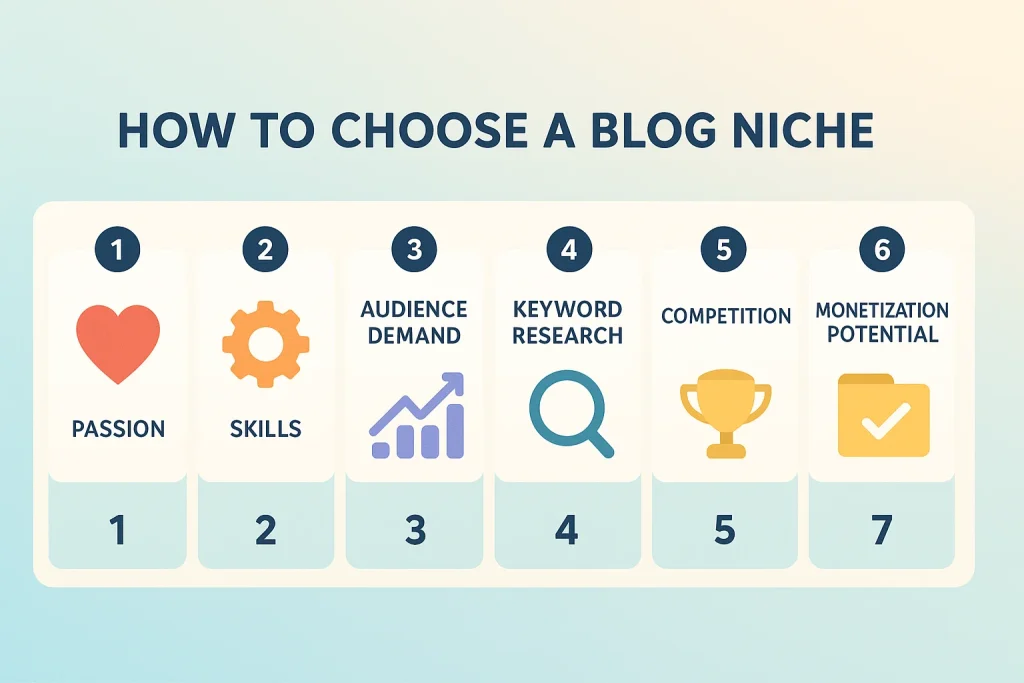
Choosing the right blog niche is the cornerstone of building a successful blogging business. If your niche isn’t aligned with your interests, the market demand, and monetization opportunities — you’re setting yourself up for frustration. So, how do you find a blog niche that works for YOU?
Let’s break it down with a proven 7-step process to help you identify a profitable, sustainable, and exciting niche you can confidently build around.
Step 1: List Your Interests and Skills
Start with YOU. List out:
- Topics you enjoy learning or talking about
- Hobbies and passions
- Professional or academic expertise
- Problems you’ve solved or are solving in real life
The goal here is to align your blog with a subject you won’t get bored with. Your enthusiasm will fuel your consistency and voice.
Tip: Even if you don’t consider yourself an “expert,” your learning journey can become valuable content in itself.
Step 2: Research What People Are Searching For
There’s no use writing content no one looks for. Use keyword tools like:
- Google’s “People Also Ask”
- Ubersuggest
- AnswerThePublic
- Ahrefs Free Keyword Generator
Search for your topics and look at keyword volume and competition. Are people actually searching for this?
SEO Tip: Focus on long-tail keywords (e.g., “meal prep for college students”) with lower competition to get started.
Step 3: Validate Demand and Market Trends
Use platforms like Google Trends, Reddit, Quora, and niche Facebook groups to explore:
- Are people actively discussing this topic?
- Are new questions being asked often?
- Is this niche stable or declining?
Tip: A niche that’s trending upward or has steady interest is a safer bet than a fizzling fad.
Step 4: Explore Monetization Opportunities
Ask: Can I actually make money from this?
Look for:
- Affiliate programs (Amazon, ShareASale, CJ, etc.)
- Info products (courses, eBooks, templates)
- Services (consulting, coaching, writing)
- Sponsored content potential
Pro Tip: Research existing blogs in your niche and reverse-engineer how they make money.
Step 5: Analyze the Competition
Search your niche in Google and analyze:
- Who’s ranking?
- Are they individuals or big companies?
- What content formats dominate (how-to, reviews, opinion)?
- Can you provide better, deeper, or more engaging content?
Tip: Use tools like SimilarWeb or Ubersuggest to spy on competitors’ top posts and traffic.
Step 6: Find Your Unique Angle or Sub-Niche
Instead of just “fitness,” consider:
- Fitness for moms with toddlers
- Home workouts for busy professionals
- Strength training for seniors
Drilling down helps you:
- Attract a loyal audience
- Create focused content
- Stand out from generalist blogs
SEO Win: Google loves topical relevance and authority. Niching down helps you build both.
Step 7: Test with 5–10 Blog Post Ideas
Before locking in your niche, draft 5–10 content ideas. Ask:
- Do they excite you?
- Can you add real value?
- Can you expand into 50+ posts over time?
If yes, you’re ready to commit.
Bonus: Outline your first pillar post and cluster topics. This will form the core of your blog’s SEO strategy.
🛑 Common blogging mistakes to Avoid When Choosing a Blog Niche
Before you lock in your blog niche, it’s just as important to know what not to do. Too many new bloggers dive in with excitement only to realize they’ve chosen a niche that’s either too broad, too competitive, or one they lose interest in quickly. From chasing trends instead of passion, to ignoring audience demand, the wrong choice can cost you time, money, and momentum.
That’s why we’ve created a dedicated guide to walk you through the 15 most common niche selection mistakes— with real-world examples and solutions to avoid them.
Learning these early on can save you months of frustration — and help you step into your blogging journey with clarity and purpose.
Some examples of profitable niches :
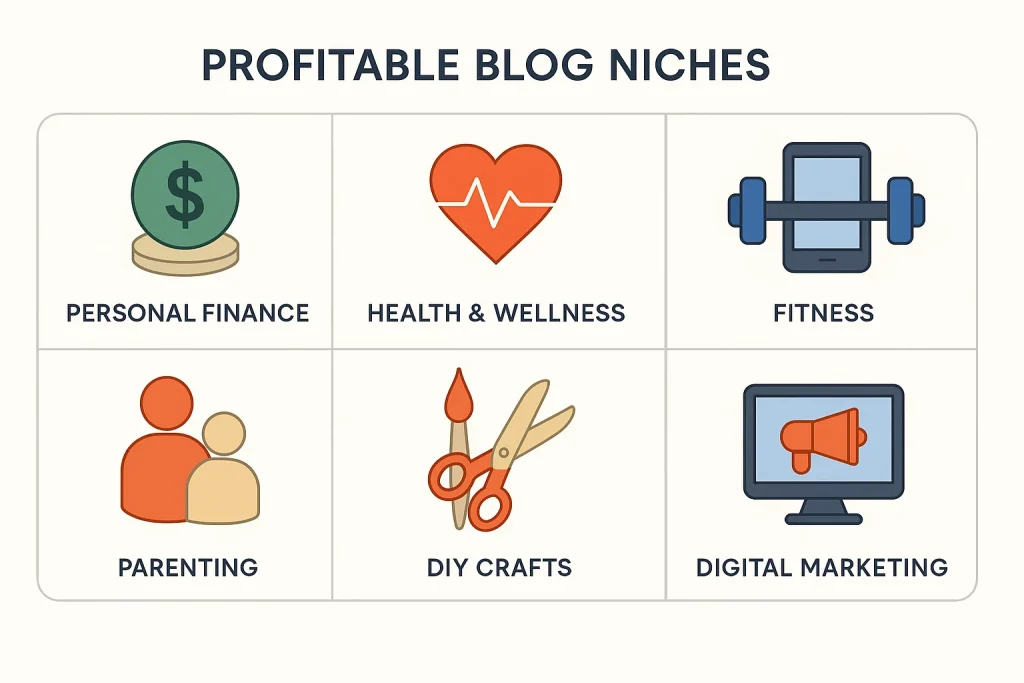
Niche 1: Personal Finance and Budgeting
Teach people how to manage their money, pay off debt, build savings, and invest for the future.
- Budgeting Strategies: Help readers control spending and track expenses.
- Debt Repayment Plans: Offer guidance on paying off loans and credit cards.
- Investing Basics: Educate readers on stocks, ETFs, crypto, and retirement planning.
- Financial Independence: Explore FIRE (Financial Independence, Retire Early) principles.
- Tools and Apps: Recommend personal finance software and budgeting tools.
Niche 2: Tech and AI
Cover the latest in technology, digital innovation, and artificial intelligence.
- Tech Trends and Innovations: Explore groundbreaking gadgets and future predictions.
- Software Reviews: Compare popular tools and new SaaS products.
- AI Applications: Break down how AI impacts industries like healthcare and finance.
- VR/AR: Educate readers on virtual and augmented reality trends.
- Web3 and Blockchain: Introduce decentralized platforms and crypto technologies.
Niche 3: Health and Wellness
Provide actionable advice for living a healthier, more balanced life.
- Nutrition and Meal Plans: Focus on whole foods and special diets.
- Fitness Tips: Share routines, challenges, and training plans.
- Mental Health: Discuss stress relief, mindfulness, and self-care.
- Holistic Healing: Explore alternative approaches like yoga and natural remedies.
- Habit Formation: Guide readers through building healthy routines.
Niche 4: Digital Marketing and SEO
Help individuals and businesses grow through content strategy, branding, and promotion.
- SEO Tutorials: Teach on-page and technical SEO basics.
- Social Media Strategy: Offer platform-specific growth tips.
- Email Marketing: Build lists, automation, and conversion funnels.
- Blogging Tools: Review writing software, keyword research tools, and more.
- Analytics: Show how to interpret traffic data and optimize performance.
Niche 5: Food and Recipes
Appeal to foodies and home cooks with practical and delicious ideas.
- Dietary Specific Recipes: Cater to gluten-free, vegan, keto, or paleo audiences.
- Cooking Techniques: Teach meal prep, batch cooking, and kitchen hacks.
- Food Photography: Inspire with stunning visuals and tips.
- Family Meal Planning: Help busy parents with weekly meal guides.
- Restaurant and Product Reviews: Explore trending foods and brands.
Niche 6: Blogging and Online Business
Share your journey and guide others on building an online income through content.
- Blog Setup Guides: From WordPress to hosting and themes.
- Traffic Growth: Share SEO, Pinterest, and social strategies.
- Monetization Models: Break down affiliate marketing, ads, and courses.
- Case Studies: Publish real blog income reports and growth stories.
- Business Mindset: Help readers stay motivated and organized.
Niche 7: Self-Improvement and Productivity
Speak to readers interested in personal growth and time management.
- Goal Setting: Show how to map and reach life and career goals.
- Productivity Systems: Share techniques like Pomodoro or time-blocking.
- Self-Reflection: Include journaling prompts and personal challenges.
- Confidence Building: Explore body language, affirmations, and mindset tools.
- Motivation: Offer inspiring stories and science-backed routines.
Niche 8: Parenting and Family Life
Support modern parents in raising healthy, happy kids.
- Pregnancy & Baby Tips: Cover everything from nursery checklists to feeding.
- Child Development: Share expert insights and activities by age.
- Parenting Styles: Talk about gentle parenting, co-sleeping, etc.
- Homeschooling: Offer curriculum guides and home teaching support.
- Family Organization: Share routines, meal plans, and budget tips.
Niche 9: Travel and Budget Adventures
Help readers explore the world affordably.
- Budget Travel Tips: Teach how to travel cheap without sacrificing experience.
- Destination Guides: Share your itineraries, tips, and must-sees.
- Travel Gear Reviews: Recommend backpacks, apps, and tools.
- Digital Nomad Lifestyle: Talk about working remotely while traveling.
- Safety and Insurance: Explain options and risk management.
Niche 10: Fashion and Beauty
Inspire readers to express themselves and look their best.
- Style Advice: Focus on capsule wardrobes, seasonal looks, and essentials.
- Skincare Guides: Offer routines for different skin types.
- Makeup Tutorials: Teach step-by-step looks and reviews.
- Sustainable Fashion: Explore slow fashion and ethical brands.
- Beauty Product Reviews: Recommend your favorite products and tools.
Frequently Asked Questions (FAQs) About Choosing a Blog Niche
Q: What is a blog niche?
A: A blog niche is the specific topic or category your blog focuses on. It helps define your content, attract the right audience, and build authority in a particular space—like fitness, travel, or personal finance.
Q: Why do I need to choose a blog niche?
A: Choosing a niche helps your blog stand out in a competitive market. It enables search engines to understand your focus, builds audience trust, and makes content creation easier and more strategic.
Q: Can I blog about multiple topics?
A: You can, but it’s best to keep them closely related. For example, “health and fitness” or “personal finance and investing” work well together. Too many unrelated topics confuse readers and dilute your blog’s SEO impact.
Q: What if I’m interested in many topics?
A: Start with one niche you’re passionate about and explore sub-niches later. Once your blog has built authority and traffic, you can expand into adjacent categories.
Q: How do I know if my niche is profitable?
A: Look for demand (via keyword research), affiliate programs, advertising potential, and whether people in that niche are spending money on tools, services, or information.
Q: Can I change my blog niche later?
A: Yes, but pivoting takes work. You may lose SEO rankings or alienate your current audience. It’s better to start narrow and expand later, rather than switch directions entirely.
Q: How specific should my niche be?
A: A good niche is specific enough to target a clear audience but broad enough to support plenty of content. For example, “budget travel for couples” is a strong micro-niche.
Q: What are the most profitable blog niches in 2025?
A: Some top niches include personal finance, health and wellness, tech and AI, food and recipes, self-improvement, and digital marketing.
Q: Do I need to be an expert in my niche?
A: Not necessarily. You can learn and grow with your audience. Just be honest, research well, and provide helpful, accurate content consistently.
Q: How long should I stick with my niche before seeing results?
A: Most bloggers start seeing traction within 6–12 months of consistent effort. Stick with it, refine your content strategy, and stay focused on solving reader problems.
Final Word: Take Your Time, Then Commit
Choosing the right blog niche isn’t something to rush. Ask yourself:
- What topics am I passionate about?
- What do I know well or want to learn more about?
- Is there a demand (and monetization potential) for this niche?
Once you find the right fit, go all in. Create focused content. Solve problems. Build trust.
And remember: a well-defined niche is the foundation of every profitable blog.
Choosing the right blog niche isn’t something to rush. Ask yourself:
- What topics am I passionate about?
- What do I know well or want to learn more about?
- Is there a demand (and monetization potential) for this niche?
Once you find the right fit, go all in. Create focused content. Solve problems. Build trust.
And remember: a well-defined niche is the foundation of every profitable blog.
💬 Quick Question:
What’s one niche idea you’ve been thinking about starting? Drop it in the comments—I’d love to help you refine it!