

Disclosure: We’re reader-supported. When you buy through links on our site, we earn a commission at no cost to you.
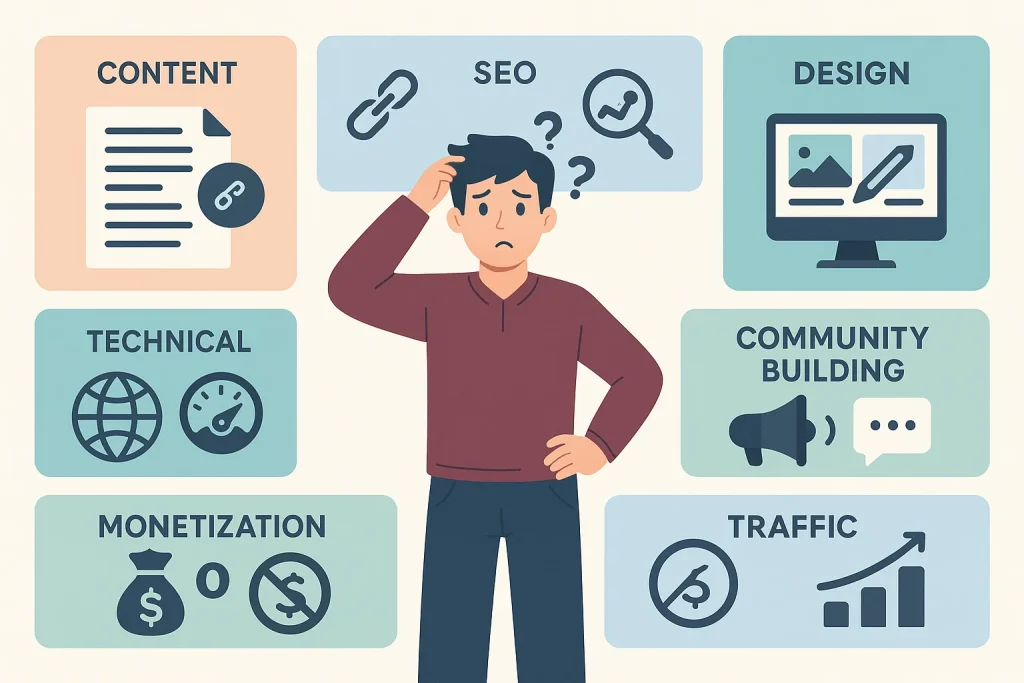
Why This Post Matters & What You’ll Get ?
Let’s be honest—blogging in 2025 is no joke. With thousands of blog posts published every single day, it’s no longer enough to just write. To stand out, grow, and actually make money from your blog, you need to do things right—from day one.
But here’s the catch: most beginner bloggers (and even many experienced ones) fall into traps that hold them back. Some of these are small slip-ups like forgetting to optimize images. Others are deal-breakers—like choosing a niche just because it’s trending, or writing content that only interests you.
That’s exactly why we created this post.
This isn’t just a list of blogging mistakes. It’s a complete diagnostic guide based on real-world blogging experience, performance SEO standards, and monetization strategy.
We’ve categorized the 109 biggest blogging mistakes to avoid in 2025 into 5 core areas:
Each section includes clear explanations, tips on what to do instead, and internal links to our supporting resources to deepen your learning.
Just start ? .. Read : How to Choose a Blog Niche and Create a Memorable Brand
Quick SEO Tip: Wondering how to avoid most Blogging Mistakes the right way? Start with a relatable problem, state the value of reading on, and clearly tell your reader what they’ll gain. That’s exactly what we just did—and what you should do in your own blog intros too.
So if you’ve ever asked yourself, “Why is my blog not growing?”—this guide is for you.
👍 With that in mind, I have a question for you: Are you ready to learn what not to do of Blogging Mistakes and start blogging the smart way?
If you said yes, let’s dive into the first category of mistakes and make sure your content game is rock solid.
📝 Content Writing & Editorial Blogging Mistakes

These are the heart of your blog—and where most bloggers make the biggest missteps. If your content doesn’t engage, solve a problem, or rank well, you’ll struggle to build momentum. Let’s fix that.
1. Publishing duplicate content
Search engines penalize copied content. Be original, and if you quote others, always provide proper credit and links.
2. Using a generic writing style
Avoid robotic or overly formal tones. Show your unique voice and connect like you’re talking to a friend.
3. Writing intros that are too long
Don’t delay the value. Grab attention in the first few lines and get to the point quickly.
4. Not creating headlines with a target keyword in mind
Strong headlines get clicks. Always include a relevant keyword and make your title benefit-driven.
5. Using fluff to increase word count
Every sentence should serve a purpose. Remove repetition and filler that adds no real value.
6. Writing hard-to-read content
Large blocks of text scare readers away. Break your content into sections and use formatting wisely.
7. Referring to outdated stats
Old data damages credibility. Regularly audit your posts and refresh stats with newer, trustworthy sources.
8. Alienating certain readers
Use inclusive language and avoid generalizations. Make everyone feel welcome and understood.
9. Encouraging your audience to take sides
Controversy may bring clicks, but it can divide your audience. Be thoughtful and respectful.
10. Focusing on products rather than your audience’s problems
Don’t start with what you want to sell—start with what your audience is struggling with.
11. Relying only on stock photos
Stock images are okay occasionally, but original visuals like screenshots or infographics build trust.
12. Guessing what your readers like
Use tools like Google Analytics, surveys, or comment feedback to understand your audience.
13. Publishing thin content
Low-value content won’t rank or convert. Provide depth, examples, and clear takeaways.
14. Not using subheadings
Headers improve SEO and break up your article. Use them every 200-300 words.
Internal links should enhance context. Never redirect visitors off-topic just for traffic.
16. Leaving readers with unanswered questions
Anticipate what they’ll ask next and answer it, or guide them to a follow-up post.
17. Redundancy
Repetition kills engagement. Say it once—well—and move on.
18. Being too lazy to proofread and edit
Errors damage credibility. Use editing tools or hire a proofreader for important posts.
19. Publishing incomplete or unfinished posts
Hit publish only when the content is complete, useful, and polished.
20. Not using CTAs
Always tell your readers what to do next—read another post, comment, download, or buy.
21. Not creating evergreen content
Trendy posts are fine, but evergreen content brings traffic for years. Balance both.
22. Attacking your competitors’ reputation
Critiquing is fine. But stay professional and focus on what you offer.
23. Creating only text-based content
Multimedia adds engagement. Try videos, checklists, slides, or embedded tweets.
24. Rushing blog posts just to meet a schedule
Publishing regularly is important—but don’t sacrifice value. Quality wins long-term.
25. You don’t fact-check
Wrong info spreads fast and hurts your brand. Double-check all claims.
26. Lacking confidence in your own value propositions
Believe in what you offer. Readers can sense hesitation—own your expertise.
27. Inconsistency with content quality and post frequency
Random posting confuses readers. Set a cadence you can stick to consistently.
28. Not updating old blog posts
Old posts can rank better with updates. Refresh them with new info and links.
29. Writing without a clear outline or structure
Outlines speed up writing and help keep your message focused. Plan before you write.
Read More : Break down 29+ real blogging mistakes that still plague content creators today
Next up: Let’s move from content creation to how you share and amplify it.
📣 Promotion & Community Building Blogging Mistakes

Creating great content is only half the equation. If you don’t promote it strategically or build a loyal audience, it would be one of the big Blogging Mistakes —no matter how valuable it is. Let’s avoid the most common promotional mistakes that keep great blogs invisible.
Simply publishing isn’t enough. Share each post across relevant platforms like X (Twitter), Pinterest, LinkedIn, and Facebook to expand your reach and drive traffic.
31. Not promoting your content at all
You can’t expect organic traffic alone to grow your blog. Promotion should be a consistent part of your blogging workflow—not an afterthought.
32. Not building an email list
An email list is one of the highest-converting traffic sources. Start collecting emails from day one using opt-in forms and lead magnets.
33. Sending spammy or irrelevant emails
Low-quality email content will get you unsubscribes fast. Personalize, segment, and always provide real value in every email you send.
34. Being overly promotional
Your audience will tune out if all you do is sell. Use the 80/20 rule: provide value 80% of the time, and promote strategically the rest.
35. Ignoring your audience
Not replying to comments, emails, or social DMs sends a bad message. Engagement builds trust and community. Respond and show up.
36. Turning down collaboration invitations
Guest posting, podcast interviews, or content swaps open new doors. Saying no too often limits your growth and network potential.
37. Not participating in relevant communities
Forums, Facebook groups, and online communities can be great places to offer value and subtly promote your blog. Just don’t spam—contribute first.
38. Not using Pinterest or visual platforms
For certain niches (like travel, food, DIY), Pinterest is a massive traffic driver. Learn how to create pins and boards for consistent blog traffic.
39. Not repurposing content for multiple channels
One blog post can become a Twitter thread, carousel post, newsletter, and more. Repurpose smartly to extend its life and visibility.
40. Not using CTAs on your promotional content
Whether it’s a tweet or a Pinterest pin, always include a call to action like “Read the full post” or “Download your free checklist.”
👉 Next up, we’ll tackle your website’s foundation: design, speed, and usability.
🎨 Design, UX & Technical Setup Blogging Mistakes

Your blog’s design, usability, and backend infrastructure play a massive role in user experience, trust, and even SEO. Yet many bloggers overlook these foundational elements.
41. Using hard-to-read fonts
If your font size, spacing, or color is difficult on the eyes, readers won’t stay long. Prioritize readability.
Going for the cheapest web hosting without comparing features can cost you way more in the long run. Slow site speed, frequent downtime, poor support—these hurt SEO, user experience, and even your credibility.
What to Do Instead:
Start with a beginner-friendly yet reliable host like FastComet or A2 Hosting. Look for key features like uptime guarantees, NVMe storage, 24/7 support, and easy scalability.
🛠️ Bonus Tip: Avoid tools just because they’re “free forever.” Test, compare, and invest in the tools that actually move the needle—whether it’s hosting, SEO research, or email marketing.
43. Not backing up your blog
If something breaks or you get hacked, you’ll lose everything. Set up automatic backups.
44. Not backing up before making changes
Before plugin installs or major updates, back up manually. It’s better to be safe than sorry.
45. Not fixing broken page elements
Broken images, buttons, or links frustrate users. Regularly check and fix any errors.
46. Prioritizing appearance over performance
Fancy animations or heavy sliders can ruin load speed. Design with speed and clarity in mind.
Confusing navigation leads to higher bounce rates. Keep menus clean, clear, and intuitive.
48. Editing your theme’s parent files
Changes to the parent theme can be overwritten with updates. Use a child theme or customizer tools instead.
49. Designing only for desktop ( it is one of the biggest Blogging Mistakes )
Most traffic is mobile. Make sure your site looks and functions great on phones and tablets.
50. Choosing a difficult-to-remember domain name
Your domain should be short, brandable, and easy to spell. Avoid hyphens and numbers.
51. Placing clickable elements too close together
Buttons or links that overlap can frustrate mobile users. Maintain spacing.
52. Not updating WordPress or plugins
Outdated software is vulnerable to bugs and hackers. Always keep your site updated.
53. Keeping demo content or filler text
Delete lorem ipsum and placeholder images before launch. It makes your site look unprofessional.
54. Picking a theme that doesn’t match your niche
Your design should reflect your brand and content. Avoid themes meant for different industries.
55. Choosing bloated themes with too many features
Extra features slow down your site. Only keep what’s essential.
56. Redesigning your whole site with no plan
Major design overhauls should be strategic. Don’t change everything just because you’re bored.
57. Keeping “admin” as your username
This is a security risk. Create a unique username and strong password.
58. Using too many plugins
Every plugin affects speed and security. Use only what you need, and avoid overlap.
Related :
👉 Explore this guide: 25 Costly Technical Blogging Mistakes That Silently Kill Blog Growth
59. Downloading themes or plugins from untrusted sources
Free isn’t always safe. Use reputable developers or marketplaces only.
📌 Want help choosing your tech stack? Check out our Recommended Blogging Tools and Services to start with confidence.
Ready to dive into the SEO & traffic building mistakes next?
🔍 SEO & Traffic Growth Blogging Mistakes
Your blog won’t grow if search engines and readers can’t find or trust your content. These SEO and visibility mistakes can silently hold back your blog’s performance.
60. Enabling indexing while your site is under construction
Google may index incomplete content, hurting your rankings. Use “noindex” until you’re ready.
61. Forgetting to remove “noindex” after launch
If your site stays hidden from search engines, you won’t get any traffic. Always double-check this setting.
62. Not adding internal links
Internal linking improves SEO and helps users navigate deeper into your site. Don’t leave your posts isolated.
63. Over-optimizing or keyword stuffing
Cramming keywords into every line makes content unreadable. Aim for natural flow and 1–1.5% keyword density.
64. Not fixing broken links
Broken links frustrate users and hurt your credibility. Use tools like Broken Link Checker to audit regularly.
65. Skipping image compression
Large images slow down load times. Use WebP format and tools like TinyPNG to compress files.
66. Leaving outbound links to open in the same tab
Opening in the same tab pulls visitors away. Always set external links to open in a new tab.
67. Ignoring keyword research
Guessing what to write about is risky. Use tools like Ubersuggest, Ahrefs, or Google Trends for data-backed topics.
68. Targeting multiple pages with the same keyword
This causes “keyword cannibalization” and confuses Google. Assign a unique target keyword per page.
69. Not earning backlinks
Backlinks boost authority and rankings. Pitch guest posts, create linkable assets, and build relationships.
70. Forgetting ALT text on images
ALT text improves accessibility and SEO. Always describe images using relevant keywords where appropriate.
71. Ignoring schema markup
Schema helps search engines understand your content better. Use tools or plugins like Rank Math to add it.
72. Having a confusing site structure
Flat or messy navigation hurts UX and SEO. Use categories, breadcrumbs, and silo structures for clarity.
73. Ignoring long-tail keyword opportunities
Long-tail terms are easier to rank for and highly targeted. Use them in titles, headers, and meta descriptions.
74. Not optimizing meta titles and descriptions
Your meta tags influence click-through rates. Include keywords and a compelling reason to click.
75. Using generic or duplicate page slugs
Avoid URLs like /post-1. Instead, use keyword-rich slugs like /start-hiking-blog.
Structure matters. Use only one H1 per page and nest H2s and H3s logically for better SEO and readability.
77. Not updating old blog posts
Google favors fresh content. Regularly refresh old articles with new info, links, and improved structure.
78. Not optimizing for mobile SEO
Google is mobile-first. If your blog doesn’t look great on phones, you’ll lose rankings and readers.
79. Skipping analytics and tracking
Without Google Analytics and Search Console, you’re guessing. Use data to refine your strategy and grow faster.
Ready to dive into Strategic & Business Blogging Mistakes to avoid ?
💡 Strategic & Business Blogging Mistakes

Great content and design won’t get you far without a clear plan to grow, monetize, and manage your blog like a business. These strategy-level beginner blogging mistakes can slow or sabotage long-term success.
80. Forcing affiliate links into every post
If your content feels like a sales pitch, readers will leave. Prioritize value—add links where they naturally fit.
81. Targeting an overly broad niche
Trying to please everyone dilutes your message. Narrow your niche to stand out and build authority faster.
82. Picking a niche just because it’s popular
If you have no interest in your niche, burnout is inevitable. Choose based on passion, knowledge, and demand.
83. Using unsafe passwords or not enabling 2FA
Security isn’t optional. Use strong passwords and two-factor authentication to protect your blog and income.
84. Blogging 24/7 with no plan
Working nonstop leads to burnout. Use an editorial calendar and plan smart, not hard.
85. Hiding your face and identity (unless anonymous blogging is strategic)
People connect with people. A face builds trust—especially when you’re building a personal brand.
86. Ignoring competitors completely
You don’t need to copy them, but you should study their strategies, keywords, and gaps you can fill.
87. Going inactive for long periods
Google and your readers love consistency. Even monthly posts are better than disappearing for months.
88. Selling too early without building trust
Promoting products before earning credibility can harm your reputation. Focus on value first.
89. Skipping content categorization
No clear categories = bad UX and SEO. Organize posts into logical sections for clarity and ranking.
90. Stuffing your site with ads
Too many ads ruin user experience. Use them wisely and prioritize content clarity.
91. Believing blogging is a get-rich-quick scheme
Blogging is a long game. Results come from consistency, quality, and smart strategy—not luck.
92. Setting no clear goals
You can’t grow what you don’t measure. Define goals for traffic, income, content, or email subscribers.
93. Never investing in education or tools
Free can work, but it limits you. Invest in blogging courses, plugins, and better hosting as you grow.
94. Ignoring customer experience after monetization
Whether you’re selling courses, services, or affiliate links—support, clarity, and follow-up matter.
95. Letting warm leads disappear
If someone downloads your lead magnet or views your product—follow up. Use email sequences and retargeting.
96. Copying other bloggers’ strategies without tailoring
What works for one niche might not work for yours. Learn, but adapt to your goals and audience.
97. Trying to do everything alone
You don’t have to write, design, edit, promote, and monetize by yourself. Use tools or hire help when needed.
98. Making unrealistic promises
Avoid overhyping results or timeframes. Be transparent and focus on value and action.
99. Blogging without a monetization plan
Even if you’re just starting, know your end goal—ads, affiliates, services, or digital products.
100. Sticking to what feels “safe”
Growth happens outside your comfort zone. Try new content formats, outreach, or monetization models.
101. Promoting irrelevant affiliate products
Only recommend what you trust and your audience needs. Otherwise, it damages trust and conversions.
102. Mismanaging blog income
Track revenue, reinvest wisely, and treat your blog like a business—not just a side hustle.
103. Hotlinking or stealing content
Using someone else’s images or resources without permission can get you penalized or sued. Always create or cite properly.
🧩 Other Popular Blogging Mistakes
These final common blogging mistakes don’t always fit neatly into one of the earlier categories—but they still cause major friction for new bloggers. Let’s make sure you steer clear of these, too.
104. Ignoring Mobile Responsiveness
If your site doesn’t load well on mobile devices, you’re losing traffic and engagement. Always use a responsive theme and test across devices.
105. Not Setting Up Google Search Console & Analytics
Without data, you’re flying blind. These free tools help you track performance, fix errors, and optimize SEO and traffic.
106. Failing to Define Success Metrics
Not every win is about traffic or money. Set specific goals like email signups, content shares, or page engagement—and measure them regularly.
107. Copying Competitors Without Strategy
It’s fine to study successful blogs, but blindly imitating them without understanding what works for your niche won’t get results.
108. Starting Too Many Projects at Once
Focus is power. Trying to manage multiple blogs, platforms, or monetization strategies early on will dilute your progress.
109. Not Treating Your Blog Like a Business
If you want to earn from blogging, treat it like a business. That means planning, investing in tools, and showing up consistently.
Conclusion: amateur blogging mistakes to avoid this year.
Blogging success isn’t about being perfect—it’s about being intentional.
Mistakes will happen. But by avoiding the 103 blogging mistakes we’ve outlined, you give yourself a massive edge. Whether it’s content, promotion, SEO, or business strategy—every little improvement adds up.
👉 Next up?
Start fixing one mistake at a time, or go back and review your blog with this guide beside you.
💬 Which of these mistakes have you made before?
Leave a comment and let’s talk about how we can grow smarter together.